Categories
UNESCO warns Pakistan over ancient city’s status
UNESCO warns Pakistan over ancient city’s status
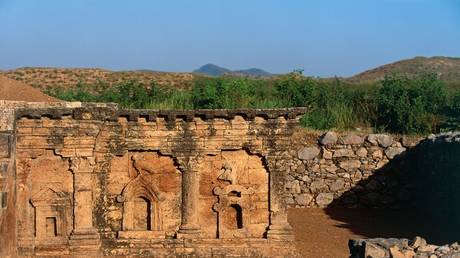
Islamabad has been told to reverse reconstruction at two sites in Taxila, or they will be added to the danger list Published 3 Jul, 2026 14:22 | Updated 3 Jul, 2026 15:25Double-Headed Eagle Stupa, Sirkap, Taxila (UNESCO World Heritage List, 1980), Punjab, Pakistan, 2nd century bC. © Getty ImagesThe United Nations’ cultural agency UNESCO has directed Pakistan to reverse the reconstruction work underway at two ancient monuments in Taxila, a world heritage site.
UNESCO warned that the construction work, if not reversed, could lead to Taxila itself being delisted from the World Heritage List, The Dawn reported.
During a recent meeting, it pointed out to senior Pakistani government officials that a world heritage site in Germany had been delisted for similar reasons – “unnecessary interventions.”
The agency said the “reconstructions” undermined the integrity of the two historic sites, Mohra Moradu and Sirkap.
Now known as Taxila, the ancient city of Takshashila flourished as a center of learning during the 6th century BC, with its origins deeply rooted in India’s Vedic period. It was recognized as a World Heritage Site in 1980.
The issue gained attention after an unidentified visitor shared information and pictures with Pakistan’s permanent delegate to UNESCO in Paris, highlighting reconstruction work by the Punjab Archaeology Department at the sites.
The information revealed that Pakistani authorities had replaced the original walls of the sites with new construction. In some instances, the height was increased. UNESCO officials subsequently visited the city.
© Autonomous Nonprofit Organization “TV-Novosti”, 2005–2026. All rights reserved.
This website uses cookies. Read RT Privacy policy to find out more.